
Introduction
The measurement of brand equity is important in this competitive era; branding is now not simply an identifier. Brands have more meaning because they stand for something more than anything else. Companies focus on marketing, communication, and customer satisfaction in their business operations, but there is one crucial question that they rarely address: how can you really know whether all your efforts make a difference?
Brand equity is not just about the popularity of the product among the consumers. Rather, it focuses on the perceptions of the consumer about your brand and the likelihood of making a purchase decision because of these perceptions. The knowledge about the measurement of brand equity gives companies insight into their brands from the perspective of the consumer.
What is Brand Equity?
To know how to measure brand equity, one needs to understand the meaning of brand equity first. According to one definition, brand equity may be described as “the branding of a product name on an attention-deficit public.”
This describes how valuable the brand is in the eyes of its customers. It is created over time with consistency in experience, communication, and performance. A good brand establishes trust, lessens decision effort, and generates loyalty.
- Brand awareness
- Perceived quality
- Associations and image
- Customer loyalty
- Emotional connection
These elements together shape how a brand is perceived and how it performs in the market.
Key Components in Brand Equity Measurement
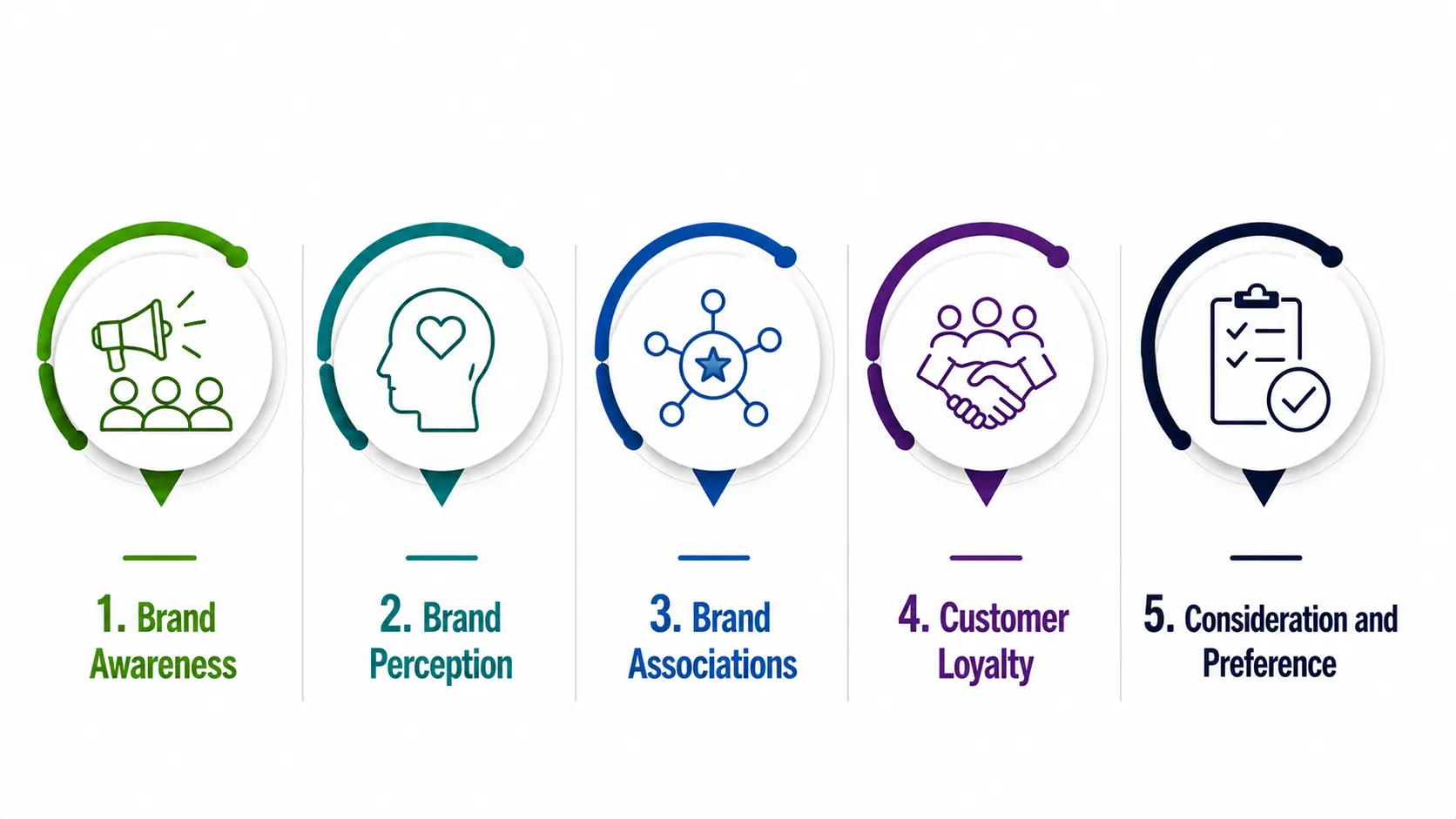
To effectively conduct brand equity measurement, businesses need to focus on several core components that together define how a brand is perceived and chosen in the market.
- Brand Awareness: Brand awareness is the extent to which consumers are aware of your brand and the ease with which they can think about it. This involves recognition (where the consumer recognizes the brand through prompting) and recall (where the consumer can recall the brand name without any prompting). Higher brand awareness levels increase the probability of brand selection. This is one of the initial stages of developing brand equity.
- Brand Perception: Brand perception entails how customers perceive your brand. This will include attributes like quality, dependability, innovation, and credibility. Brand perception does not necessarily entail what you tell customers about your brand; rather, it entails how they see your brand through experience and impressions.
- Brand Associations: Brand associations are the associations that consumers develop toward the brand. They could be functional (the benefits of using the brand product), emotional (feelings evoked by the brand), or symbolic associations (representations of the brand in general). The more significant associations developed, the better the brand differentiates itself among its competitors. Moreover, brand associations also greatly affect consumer memories and perception of the brand.
- Customer Loyalty: Customer loyalty is the measure of willingness of consumers to buy the products from the same brand over and over again. Their loyalty depends on how satisfied and emotionally involved the customers are. Not only do loyal customers contribute greatly to the sales figures, but they are also the voice of the brand.
- Consideration and Preference: Consideration and preference measure whether a brand is actively being thought of during purchase decisions. It shows where the brand stands compared to competitors in the customer’s mind. Being part of the consideration set is critical for conversion. Preference further indicates which brand is more likely to be chosen when multiple options are available.
Best Practices for Effective Brand Equity Measurement
To make the measurement of brand equity truly effective, businesses need a structured and consistent approach. It is not just about collecting data but about using the right methods and turning insights into action.
- Use a Combination of Quantitative and Qualitative Methods: Depending only on one methodology would lead to partial measurement outcomes. While quantitative analysis will bring about the scale and trend, qualitative research will bring about the insight explaining the trends. Applying both methodologies in combination would enable companies to have a more balanced outcome.
- Conduct Regular Brand Tracking Surveys: For consistent measurement results to be obtained, brand tracking surveys should be performed regularly. In this way, changes in awareness and consumer behavior would be detected over time, and the impact of the measures would be estimated.
- Implement Continuous Brand Health Tracking: By monitoring its brand performance on a continuous basis, a business will get information regarding the changing trends within the industry. Continuous brand health tracking helps businesses to remain informed and ready.
- Perform Periodic Brand Health Assessment: In addition to regular tracking, a deeper brand health assessment should be conducted periodically. This provides a more comprehensive evaluation of brand positioning, strengths, and gaps. It helps guide long-term strategic decisions.
- Benchmark Against Competitors: Brand performance should always be viewed in context. Comparing metrics with competitors helps businesses understand their relative position in the market. This highlights areas of strength and opportunities for improvement.
- Focus on Actionable Insights: Data alone does not create value unless it leads to action. Businesses should focus on insights that can directly influence decisions related to marketing, product, and strategy. The goal is to turn measurement into meaningful outcomes.
Approaches to Measurement of Brand Equity
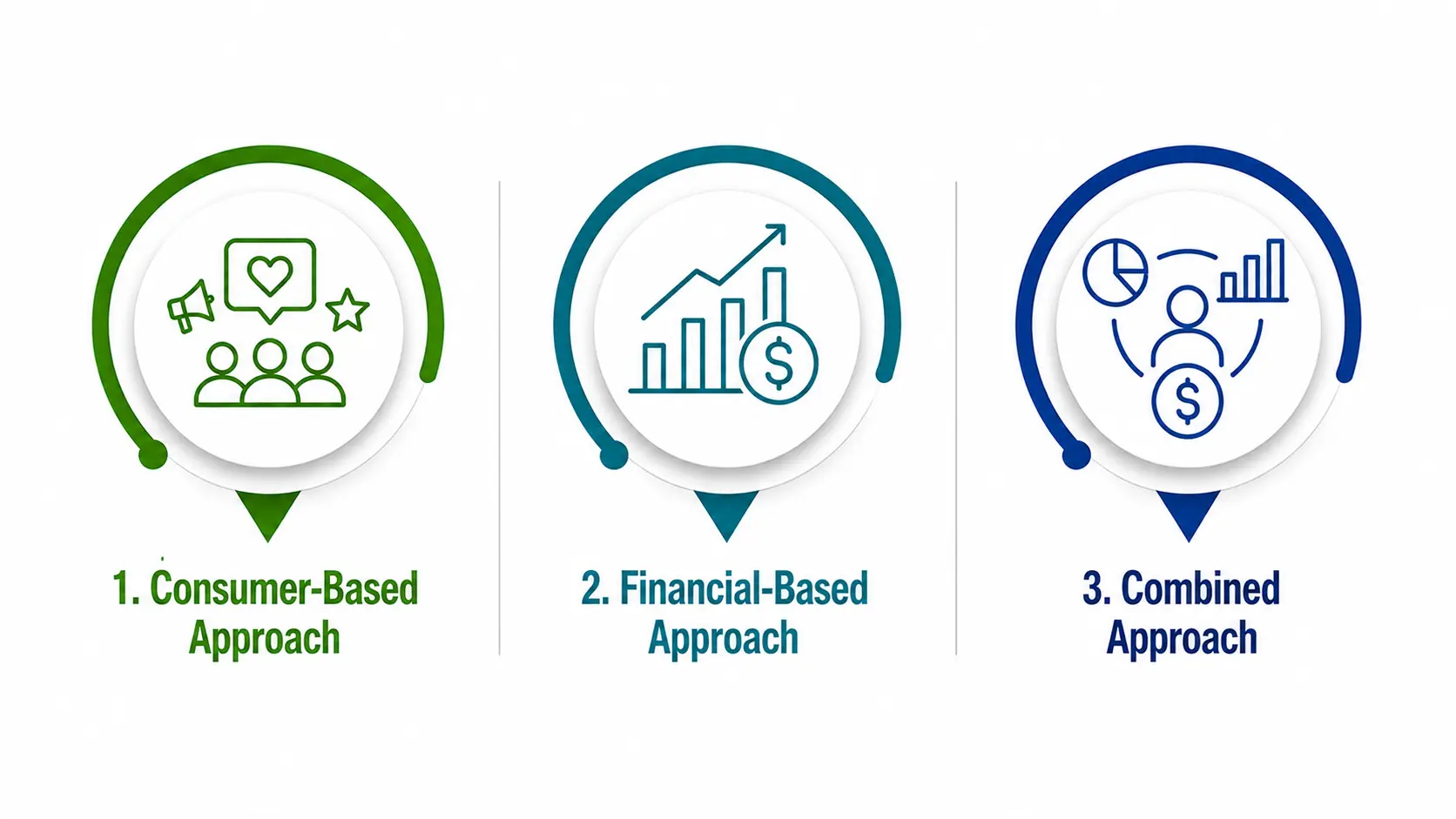
There are multiple approaches to the measurement of brand equity, depending on business objectives.
- Consumer-Based Approach: This approach focuses on how consumers perceive and interact with the brand. It looks at factors such as awareness, perception, associations, and loyalty to understand brand strength. It is the most widely used method and forms the foundation of most brand tracking surveys. By capturing real consumer sentiment, this approach helps businesses understand how their brand is positioned in the market.
- Financial-Based Approach: The financial-based approach evaluates brand equity through measurable business outcomes. It looks at how much value the brand contributes to revenue, market share, pricing power, profitability, and overall brand valuation. This approach is useful when businesses want to understand the commercial impact of their brand. It is especially relevant for investment decisions, mergers and acquisitions, brand valuation exercises, and long-term financial planning.
- Combined Approach: The combined approach brings together consumer perception data and financial performance metrics to create a more complete view of brand equity. It helps businesses understand not only how consumers feel about the brand, but also how those perceptions translate into business outcomes. This approach is often the most practical because it connects brand strength with market performance. By using both perspectives, businesses can make more balanced, evidence-based decisions about positioning, communication, investment, and growth strategy.
Role of Brand Tracking Surveys
Brand tracking surveys are one of the most effective tools for measuring brand equity. They help businesses continuously monitor how their brand performs in the minds of consumers over time instead of relying on one-time assessments. By conducting these surveys regularly, companies can track shifts in awareness, perception, preference, and overall brand performance. This creates a clearer understanding of how the brand evolves as consumer expectations and market conditions change.
These surveys help answer important business questions such as whether brand awareness is improving, if customer perception is shifting, and how the brand compares with competitors. Because they are conducted consistently, businesses can identify trends, detect early warning signs, and monitor the impact of campaigns or strategic changes. This makes brand tracking surveys an essential tool for understanding long-term brand performance in dynamic and competitive markets.
Brand tracking surveys usually include metrics such as awareness levels, usage and consideration, brand associations, customer satisfaction, loyalty, and competitive comparison. Together, these indicators provide a structured view of overall brand health. One of the biggest strengths of brand tracking is consistency, which allows businesses to measure progress over time and make better strategic decisions using reliable and comparable insights.
When combined with deeper analysis and interpretation, brand tracking surveys go beyond simply reporting numbers. They help businesses connect data with real consumer behavior, changing expectations, and market realities. This ensures that brand strategies remain relevant, responsive, and aligned with evolving customer needs. Over time, continuous tracking helps businesses strengthen positioning, improve customer relationships, and make more informed decisions with greater confidence.
Understanding Brand Health Tracking
Brand health tracking is a continuous process of monitoring how a brand performs and evolves over time. Unlike one-time studies, it focuses on understanding long-term shifts in awareness, perception, loyalty, and preference as markets and customer expectations change. While brand tracking surveys provide the data, brand health tracking helps interpret what that data actually means for the business. It connects numbers with real-world changes in consumer behavior and market positioning, giving companies a clearer and more actionable understanding of brand performance.
A strong brand health tracking system helps businesses identify early warning signs before they become major issues. It also helps evaluate the impact of campaigns, product launches, pricing strategies, and communication efforts over time. This allows businesses to respond proactively rather than react after challenges have already affected brand performance.
More importantly, brand health tracking turns brand evaluation into an ongoing strategic process instead of a one-time activity. It helps businesses stay aligned with evolving consumer expectations, competitive movements, and changing market realities. By consistently tracking brand strength and market response, companies can make more informed and timely decisions. Over time, this helps protect brand value, improve customer relationships, and maintain long-term relevance in an increasingly competitive market.
Brand Health Assessment
For effective analysis, brand metrics need to be tracked consistently over time. However, maintaining the same methodology, questions, and benchmarks can be challenging. Any inconsistency can make it difficult to compare results and identify real trends.
Changes in survey design, sampling approach, or data collection methods can distort comparisons across different periods. Even small adjustments in wording or structure can influence how respondents interpret and answer questions, affecting overall results. This makes it harder to determine whether changes in data reflect actual shifts in brand perception or simply differences in measurement.
At the same time, measurement frameworks cannot remain completely constant. Markets evolve, consumer expectations change, and new factors become relevant. Balancing consistency with the need to adapt is a key challenge in long-term brand tracking. Businesses must ensure that updates improve relevance without breaking comparability, so insights remain both accurate and meaningful over time.
Methods Used in Brand Equity Measurement
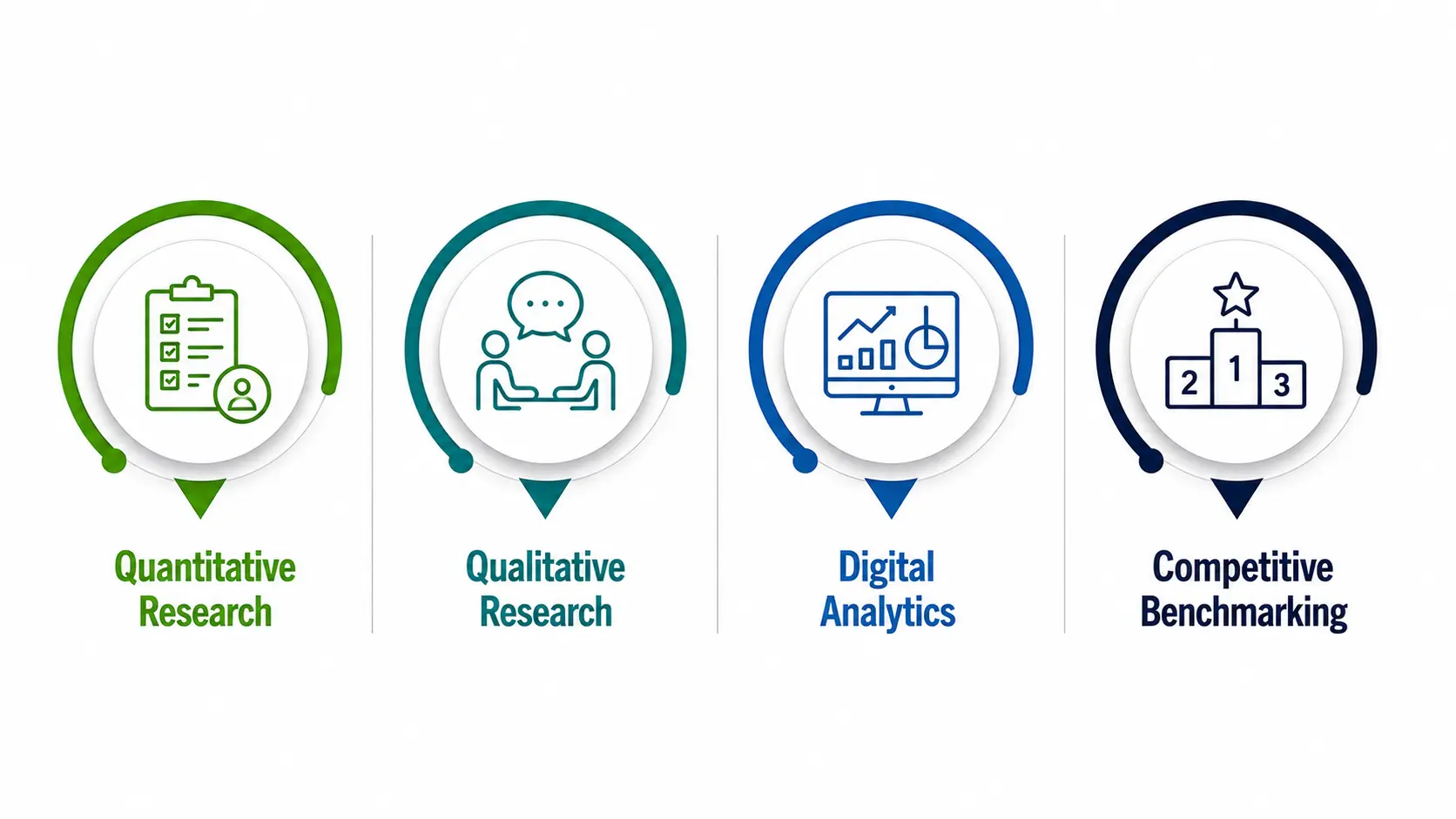
There are several research methods used in the measurement of brand equity.
- Quantitative Research: Quantitative research uses surveys and structured questionnaires to collect measurable data from a large audience. It helps track key metrics such as awareness, consideration, and satisfaction in a consistent manner. This method forms the backbone of most brand tracking surveys and provides a clear, data-driven view of brand performance over time.
- Qualitative Research: Qualitative research focuses on understanding the deeper reasons behind consumer perceptions and behavior. Through in-depth interviews and focus groups, it explores emotions, motivations, and attitudes toward the brand. This approach helps explain the “why” behind the numbers and adds context to quantitative findings.
- Digital Analytics: Digital analytics looks at online behavior to understand how consumers interact with the brand in digital environments. It includes metrics such as search trends, website activity, and social media engagement. These insights provide real-time signals about brand perception and help identify emerging trends.
- Competitive Benchmarking: Competitive benchmarking involves comparing brand performance with that of competitors. It helps businesses understand their relative position in the market across key metrics such as awareness, perception, and preference. This method provides context and highlights areas where the brand is leading or falling behind.
Challenges in Measurement of Brand Equity
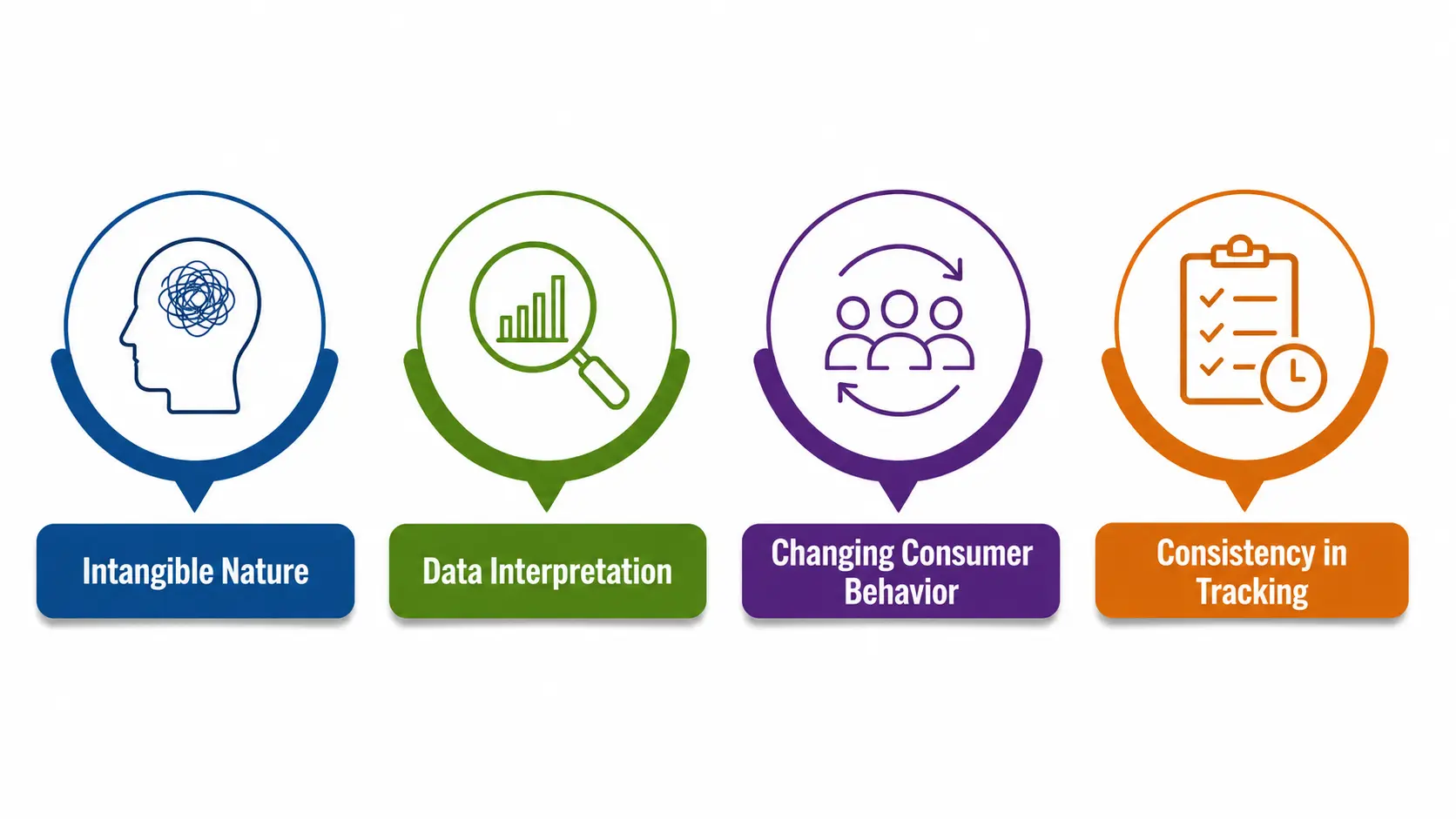
While the measurement of brand equity is essential, it is not always straightforward. Since brand equity is built on perception and behavior, capturing it accurately requires careful planning, the right methods, and continuous changes.
- Intangible Nature: Brand equity is largely based on how consumers think and feel about a brand. Unlike sales or revenue, perception cannot be measured directly, which makes it challenging to capture the true strength of a brand with complete accuracy. Perceptions vary across different customer segments, making it harder to arrive at a single, unified measure. Emotional and psychological factors also influence brand equity, increasing complexity.
- Data Interpretation: Collecting data is relatively easier than making sense of it. Even with strong brand tracking surveys, interpreting the data requires context and expertise. Misinterpretation leads to incorrect conclusions and poor strategic decisions. Numbers alone do not reveal underlying reasons, which can result in surface-level insights.
- Changing Consumer Behavior: Consumer preferences, expectations, and behaviors are constantly evolving. What works for a brand today may not work tomorrow, which makes it necessary to regularly update measurement approaches and stay aligned with current market realities. External factors such as technology, competition, and cultural shifts can also influence behavior rapidly.
- Consistency in Tracking: For effective analysis, brand metrics need to be tracked consistently over time. However, maintaining the same methodology, questions, and benchmarks can be challenging. Any inconsistency can make it difficult to compare results and identify real trends.
Changes in survey design or data collection methods can distort comparisons across periods. Ensuring consistency while still evolving the framework to stay relevant is a key challenge in long-term brand tracking.
Conclusion
However, the analysis of brand equity should go beyond just looking at numbers. Creating a strong brand requires a certain period of time and effort to provide relevant experience, communicate with consumers, and deliver quality products or services. Companies that assume positive results of their work often ignore early warning signals, while enterprises that regularly measure brand equity can detect flaws and monitor their growth in a timely manner.
The use of various types of measuring brand equity makes it possible to analyze your business from all sides. Combining consumer-based, financial-based, and hybrid approaches, as well as implementing regular tracking and evaluation, gives an opportunity to assess the performance of your brand properly.
In this competitive world, only companies that constantly evaluate and improve their activities can stay relevant. Therefore, brand equity measurement allows businesses to go further and build customer relationships based on mutual trust and preference
Because ultimately, a brand’s true value is not defined by what it communicates but by what consumers perceive, experience, and believe over time.