
Introduction
In today’s competitive business environment, treating all customers the same is no longer effective. Markets have become more diverse, consumer expectations have evolved, and buying behavior varies significantly across segments. This is where market segmentation plays a crucial role.
Instead of targeting everyone with a single approach, businesses now focus on dividing the market into smaller, more manageable groups using different market segmentation types. This allows them to better understand their audience, tailor their offerings, and improve overall effectiveness.
Understanding market segmentation meaning is not just important for marketers but also for any business that is aiming to build relevance, improve customer experience, and drive sustainable growth.
Meaning of Market Segmentation
Market segmentation is the process of dividing a broad market into smaller groups of consumers who share similar characteristics, needs, or behaviors.
These groups, often called segments, are created based on factors such as demographics, geography, behavior, or lifestyle. The idea is simple: when you understand what makes each group different, you can design strategies that speak directly to them instead of using a generic approach.
In simple terms, market segmentation is about recognizing that not all customers are the same, and they should not be treated the same way. What works for one group may not work for another. By breaking the market into meaningful segments, businesses communicate more clearly, offer more relevant products, and build stronger connections with their customers.
Its core idea is helping businesses move from guessing what customers want to actually understanding and responding to their real needs.
Importance of Market Segmentation
In a market where consumer needs and behaviors vary widely, a one-size-fits-all strategy often leads to missed opportunities and ineffective outcomes. Market segmentation plays a huge role in the following:
- Helps Businesses Understand Market Diversity: The importance of market segmentation lies in recognizing that customers are not the same. Different groups have different needs, behaviors, and expectations. Segmentation helps businesses acknowledge this diversity and approach the market in a more structured way.
- Guides Strategic Decision-Making: Market segmentation plays a key role in shaping business strategy. It helps define which customers to target, how to position products, and where to focus efforts. Without segmentation, decisions are often based on assumptions rather than clear direction.
- Forms the Foundation of Marketing Strategy: Effective marketing begins with knowing who you are targeting. Market segmentation provides this foundation by clearly identifying customer groups. It ensures that all marketing efforts are aligned with the right audience.
- Reduces the Risk of Generic Approaches: Without segmentation, businesses tend to use one-size-fits-all strategies. This can lead to poor engagement and missed opportunities. Segmentation ensures that strategies are tailored rather than broad and ineffective.
- Supports Long-Term Business Growth: By identifying and understanding different segments, businesses can build strategies that are sustainable over time. It allows companies to adapt as markets evolve and customer needs change.
Market segmentation: Psychographic
Psychographic market segmentation focuses on understanding people beyond basic details like age or income. It looks at how people think, what they value, what interests them, and how they live their lives.
Instead of asking who the customer is, psychographic segmentation answers why they behave the way they do. It looks at things like lifestyle, values, interests, and personality. Because often, people don’t make decisions just based on age or income. They make decisions based on what they believe in, what they aspire to, and how they see themselves.
For example, two people earning the same income might make completely different choices. One might prefer premium, lifestyle-driven brands, while the other focuses on practicality and value. Psychographic segmentation helps you understand these differences.
At the end of the day, this type of segmentation helps brands connect more naturally with people. It allows businesses to speak in a way that feels relatable, not generic, and that’s what makes the message actually stick to the consumers.
Bases of Market Segmentation
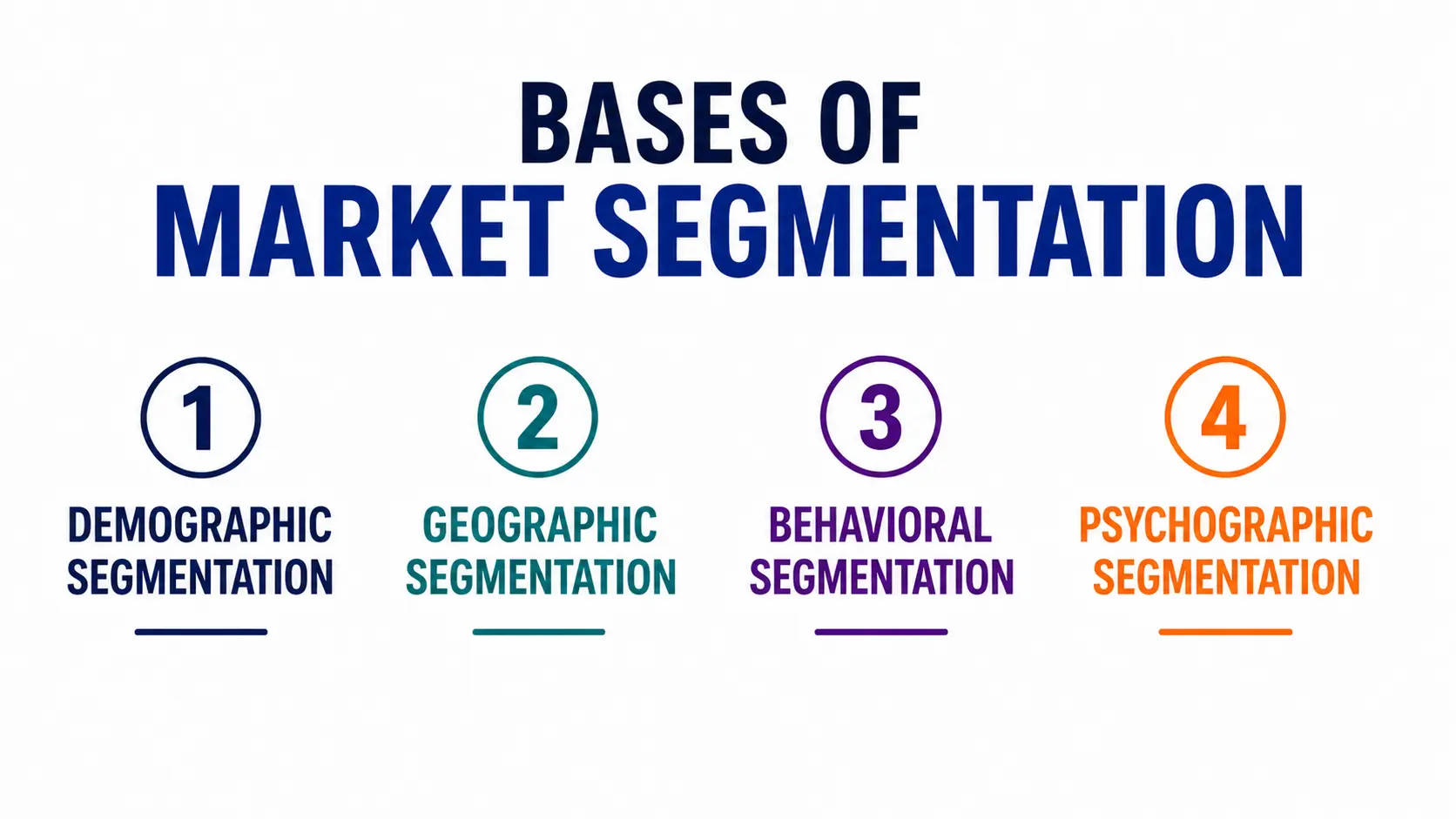
Market segmentation is built on specific criteria used to divide the market into meaningful groups. These bases help businesses identify how customers differ and how they should be approached. Choosing the right base ensures that segmentation is relevant, practical, and actionable.
- Demographic Segmentation: This is one of the most commonly used market segmentation types. It divides the market based on measurable characteristics such as age, gender, income, education, occupation, and family size. Demographic segmentation is widely used because it is easy to identify and helps businesses quickly define their target audience. For example, luxury brands may target high-income groups, while budget products focus on price-sensitive consumers.
- Geographic Segmentation: Geographic segmentation divides the market based on location, such as country, region, city, or climate. This type is especially important in diverse markets where consumer preferences vary across regions. Businesses can tailor their products, pricing, and communication based on local needs and conditions.
- Behavioral Segmentation: Behavioral segmentation focuses on how consumers interact with a product or service. It includes factors such as usage patterns, purchase frequency, brand loyalty, and benefits sought. This approach helps businesses understand actual consumer actions rather than just characteristics.
- Psychographic Segmentation: Psychographic market segmentation focuses on lifestyle, values, interests, and personality traits. This type goes deeper than demographics by explaining why consumers behave in a certain way. It is particularly useful for brands that rely on emotional connection, lifestyle positioning, or aspirational value
Types of Market Segmentation
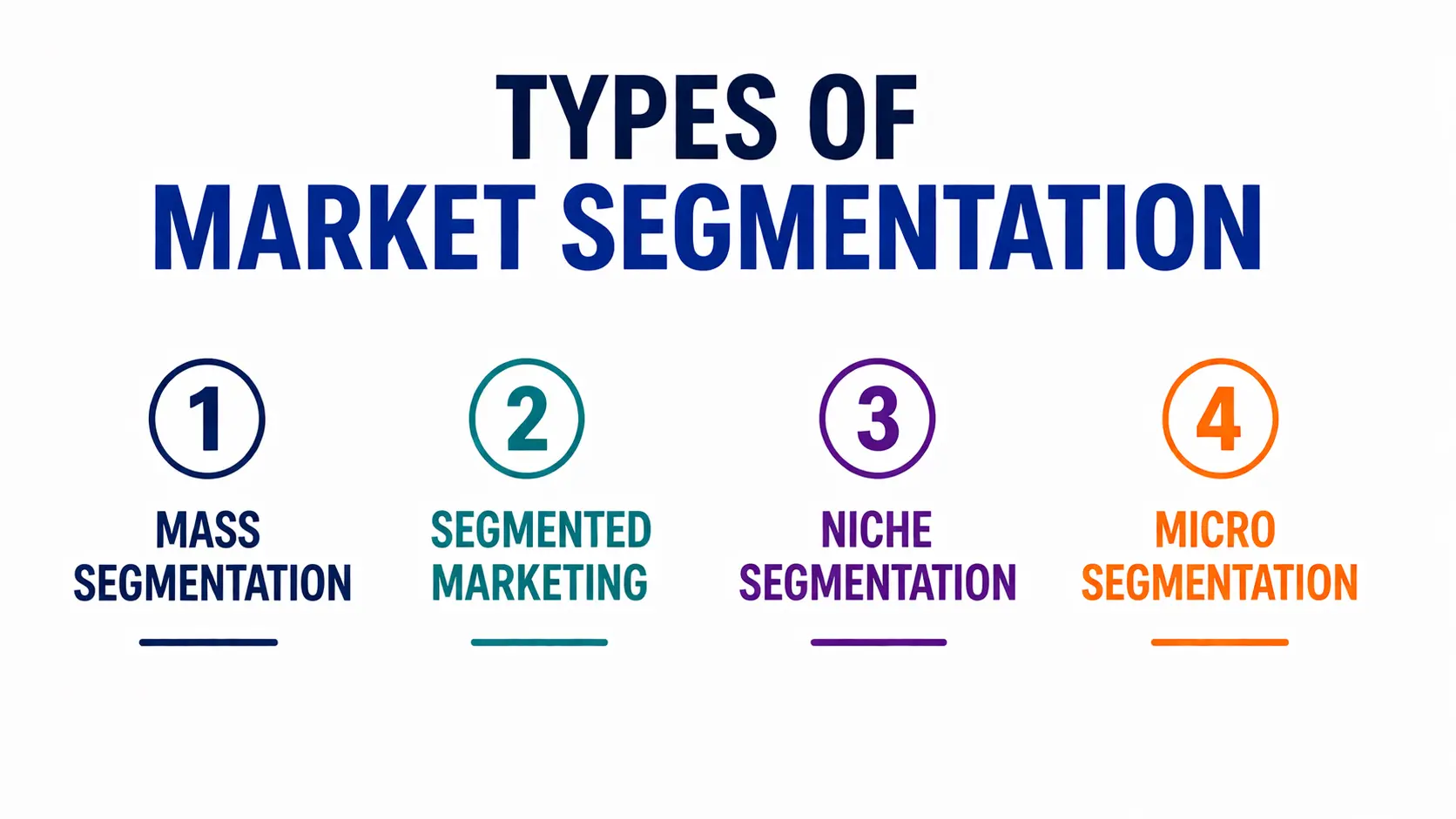
Market segmentation types can be applied in different ways depending on business needs and strategy. Each type offers a different level of focus, from broad coverage to highly personalized targeting.
- Mass Segmentation: This approach treats the entire market as one group and uses a single strategy for everyone. It works best for products that have wide and general appeal. However, because it doesn’t account for differences, it may feel less relevant to many customers.
- Segmented Marketing: Here, the market is divided into different groups, and each group is approached differently. This helps businesses connect better with customers by addressing their specific needs. It’s a practical balance between personalization and scale.
- Niche Segmentation: This focuses on a smaller, clearly defined group of customers with specific needs. It is often used by brands that want to stand out by serving a particular audience really well. This approach helps build stronger relationships and loyalty.
- Micro Segmentation: This is a more detailed approach where customers are divided into very specific groups, sometimes almost individually. It allows highly personalized communication and offerings. While it improves relevance, it also requires more data and effort to execute effectively.
Market Segmentation in Marketing
In simple terms, market segmentation in marketing means not trying to sell the same thing to everyone in the same way. It’s about understanding that different people have different needs and adjusting your approach accordingly.
Instead of a one-size-fits-all strategy, businesses break their audience into smaller groups and speak to each group in a way that feels relevant. This could change how a product is presented, how it is priced, or even how it is advertised.
For example, what appeals to a young urban customer might not work for someone in a smaller town. The product may be the same, but the messaging, tone, and focus need to change to connect in a better way.
Market Segmentation Analysis
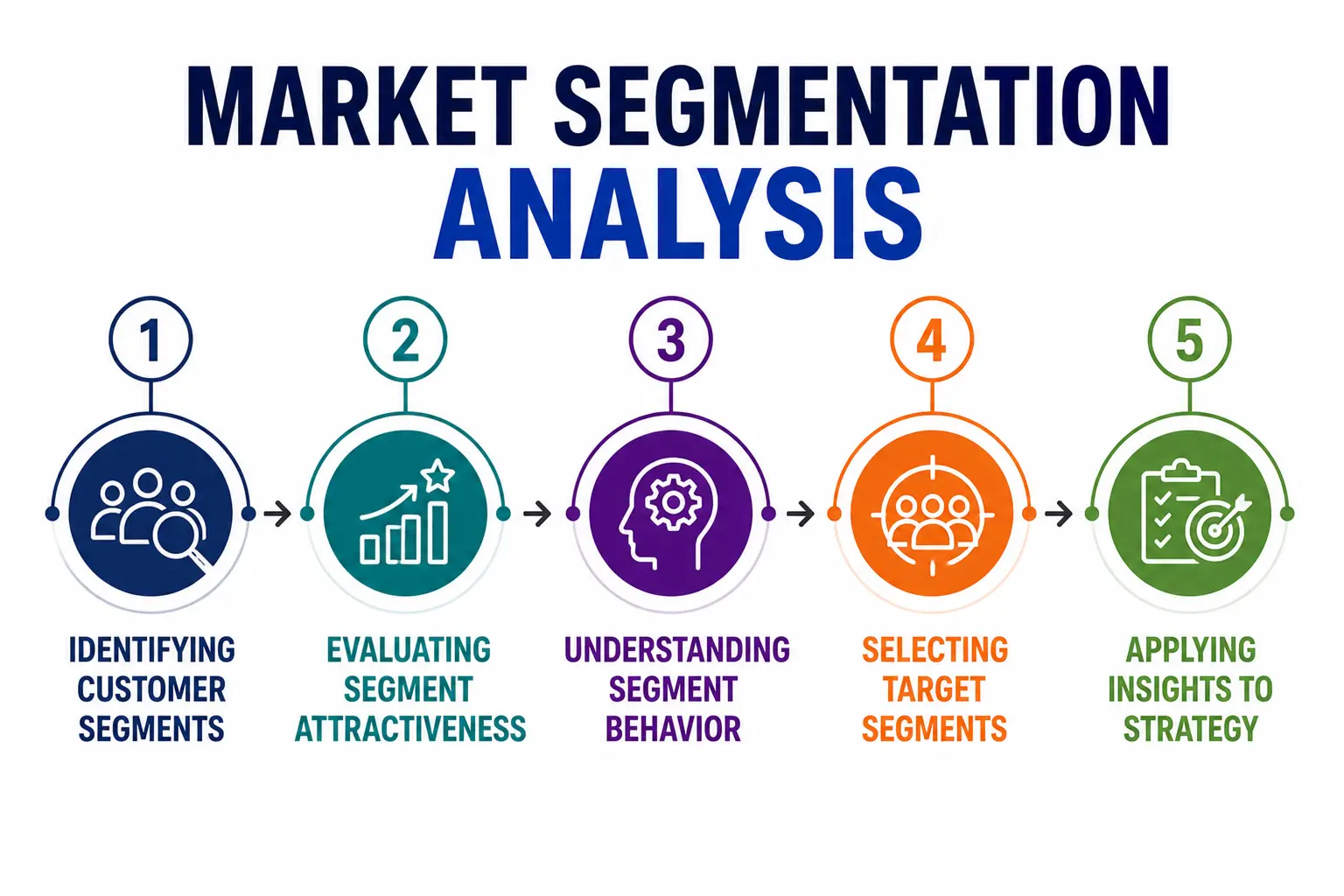
Market segmentation analysis is the process of identifying, evaluating, and selecting the most relevant segments. It is much more than simply dividing the market; it helps businesses understand which segments offer the highest potential and how to approach them effectively. Market segmentation analysis answers three key questions:
Who are our customers?
This helps you move beyond assumptions and clearly define the people you are trying to serve. It includes understanding their needs, behavior, and overall profile.
How are they different from each other?
Not all customers think or behave the same way. This step helps identify meaningful differences in preferences, expectations, and decision-making patterns.
Which groups should we focus on?
Once segments are identified, the focus shifts to choosing the ones that matter most. This helps businesses prioritize efforts and invest where the highest potential exists.
Together, these questions help turn a broad market into clear, actionable direction.
- Identifying Customer Segments: The first step in market segmentation analysis is to collect and study customer data. This includes demographic details, behavior patterns, preferences, and lifestyle factors. Based on this information, businesses can group customers who share similar characteristics. The goal is to move from a broad audience to clearly defined segments that are easier to understand and target.
- Evaluating Segment Attractiveness: Once segments are identified, the next step is to evaluate their potential. Not all segments are equally valuable, so businesses need to assess factors such as size, growth potential, profitability, and accessibility. This helps prioritize segments that are worth investing in and aligns resources accordingly.
- Understanding Segment Behavior: Market segmentation analysis also focuses on understanding how each segment behaves. This includes buying patterns, decision drivers, brand preferences, and sensitivity to pricing or messaging. A deeper understanding of behavior helps businesses design strategies that are more relevant and effective for each segment.
- Selecting Target Segments: After evaluation, businesses choose the segments they want to focus on. This decision is based on alignment with business goals, capabilities, and market opportunity. Targeting the right segments ensures that marketing and business efforts are focused rather than scattered.
- Applying Insights to Strategy: The final stage of market segmentation analysis is applying insights to real business decisions. This includes product design, pricing strategies, communication, and distribution planning. Segmentation becomes valuable only when it translates into actionable strategies that improve performance.
Advantages of Market Segmentation
It’s important to understand that market segmentation helps businesses move from a broad approach to a more focused and relevant strategy. Instead of trying to reach everyone, it allows companies to connect with specific customer groups more effectively. This improves how products are designed, how messages are communicated, and how resources are used. As a result, the business operates more efficiently and achieves better outcomes. The advantages of market segmentation directly impact both strategy and performance, which are listed below:
- Better Customer Understanding: Market segmentation allows businesses to focus on specific customer groups. This makes targeting more precise and increases the chances of reaching the right audience with the right message.
- Improved Marketing Efficiency: Resources are used more effectively when efforts are focused on relevant segments. This reduces wastage and improves return on investment by concentrating on high-potential groups.
- Higher Conversion Rates: When communication is tailored to specific segments, it becomes more relevant. This increases engagement and improves the likelihood of converting potential customers into actual buyers.
- Stronger Competitive Advantage: Businesses that understand their segments better can serve them more effectively. This helps create differentiation and builds a stronger position in the market compared to competitors.
- Enhanced Customer Experience: Segmentation enables businesses to design products, services, and communication that match customer expectations. This leads to higher satisfaction and stronger customer relationships.
- More Effective Product Development: Insights from segmentation help businesses create offerings that align with the needs of specific groups. This increases the chances of product success in the market
Challenges in Market Segmentation
The challenges in market segmentation highlight that while the concept is simple, execution requires careful planning, data accuracy, and repeated refinement. Businesses that address these challenges effectively are better positioned to create strategies that are both relevant and scalable.
- Identifying the Right Segmentation Criteria: One of the biggest challenges is choosing the right basis for segmentation. Using only demographics may oversimplify behavior, while over-relying on psychographics without proper data can lead to assumptions. Selecting the right combination of market segmentation bases is critical but often difficult.
- Data Availability and Quality: Effective market segmentation analysis depends heavily on data. In many cases, businesses either lack sufficient data or rely on outdated or inaccurate information. Poor data quality can lead to incorrect segmentation, which affects all downstream decisions.
- Over-Segmentation: The aim of market segmentation is to bring clarity, but creating many segments can lead to confusion. Over-segmentation makes strategies complex, difficult to manage, and less actionable. Instead of improving focus, it can dilute efforts and increase operational challenges.
- Difficulty in Implementation: Even when segments are clearly defined, applying them across business functions can be challenging. Aligning product, pricing, marketing, and distribution strategies with each segment requires coordination and consistency. Many organizations struggle to translate segmentation into execution.
- Dynamic Consumer Behavior: Consumer preferences and behavior are constantly evolving. Segments that were relevant at one point may lose relevance over time. This makes market segmentation in marketing an ongoing process rather than a one-time activity.
- Measuring Effectiveness: Another challenge is evaluating whether segmentation is actually working. It can be difficult to measure the direct impact of segmentation on performance. Without clear metrics, businesses may find it hard to refine their strategies.
- Balancing Customization and Cost: While segmentation enables tailored strategies, customization comes with costs. Creating different approaches for multiple segments can increase complexity and resource requirements. Businesses must balance personalization with operational efficiency.
Conclusion
In today’s complex and competitive markets, understanding customers is no longer optional; it’s essential. Businesses that treat all customers the same often struggle to connect, while those that segment their markets are better equipped to deliver value where it truly matters. As explored throughout this blog, from understanding market segmentation types to applying market segmentation analysis, the ability to divide and understand your audience is what drives relevance and effectiveness. Businesses that treat all customers the same often struggle to connect, while those that segment their markets are better equipped to deliver value where it truly matters.
Market segmentation provides the foundation for this understanding.
From identifying the right market segmentation bases to choosing the most effective market segmentation types, segmentation helps turn a broad market into clear direction. It enables better decision-making, sharper targeting, and more meaningful customer engagement. As highlighted, segmentation not only improves efficiency but also strengthens long-term growth by aligning strategies with real customer needs
The brands that succeed are not the ones that reach everyone, because in the end, growth does not come from that.
It comes from reaching the right people, in the right way.